Christmas baking
Homemade mince pies
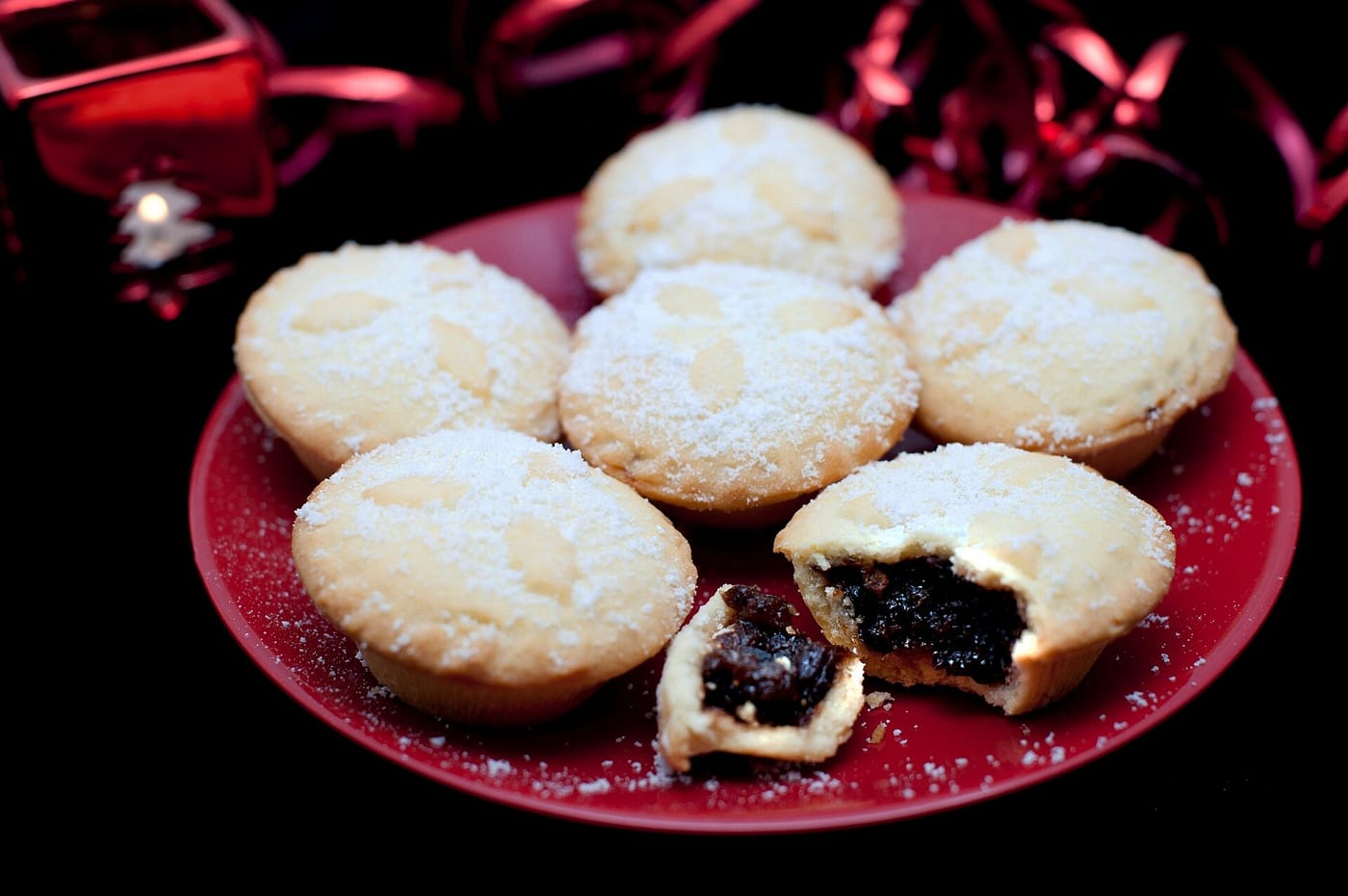
Twelve classic mince pies in a bun tin: simple shortcrust made with half fat to flour, a 300 g jar of mincemeat, star lids and 15 to 20 minutes at 200°C (gas mark 6). With how to stop soggy bottoms and leaks, and how to freeze them raw or baked for Christmas.
- Total
- 1 hr 15 min
- Prep
- 40 min
- Makes
- 12 mince pies (one 12-hole bun tin)
- Difficulty
- easy
Numbers checked in October 2026. An adaptation of a traditional recipe, written in our own words and checked against published British recipes. Every oven is different: go by the colour of the pastry as well as the clock.
Ingredients
- Shortcrust pastry
- 200 gplain flour, plus a little for rolling
- 100 gcold butter, diced, or half butter, half baking spread or lard
- 1 pinchsalt
- 3 tablespoonsice-cold water, add a splash at a time; you may need less
- Filling
- 300 gmincemeat, one standard jar, about 25 g per pie
- To finish
- 1 tablespoonmilk or beaten egg, to glaze
- 1 tablespooncaster or icing sugar, to sprinkle or dust
Method
- 1
Rub the butter into the flour and salt with your fingertips until it looks like fine breadcrumbs. Add the cold water a splash at a time, mixing with a knife, until the crumbs just come together into a dough. Don't knead it.
- 2
Flatten the dough into a disc, wrap it and chill for 10 to 30 minutes. Lightly grease a 12-hole bun tin and heat the oven to 200°C (180 to 190°C fan, gas mark 6).
- 3
Roll out about two thirds of the pastry on a floured surface, 3 to 4 mm thick. Cut 12 rounds with a cutter a little wider than the holes in the tin and press them in, so the pastry comes up the sides.
- 4
Put a heaped teaspoon of mincemeat in each case, about 25 g. Don't overfill: the mincemeat bubbles up as it cooks.
- 5
Roll out the rest of the pastry with the trimmings and cut 12 smaller rounds or stars for the lids. Lay them on top; press round lids onto the edges to seal and snip a small hole in the middle so steam can escape.
- 6
Brush the tops with milk or beaten egg and sprinkle with a little caster sugar.
- 7
Bake for 15 to 20 minutes, until the pastry is golden. Leave in the tin for a few minutes, then lift onto a wire rack. Dust with icing sugar and serve warm rather than hot.
What most often goes wrong
The problems British recipes warn about, and how to avoid them.
- Soggy bottoms
- The pastry was too thick or the oven not hot enough. Roll to 3 to 4 mm, chill the pastry, and bake at 200°C until the edges are golden.
- The filling bubbled over and stuck
- Too much mincemeat. Use a heaped teaspoon per pie, cut a steam hole in round lids, and grease the tin well.
- The pastry is hard and shrinks
- It was overworked or too wet. Rub the butter in lightly, add the water a splash at a time and let the dough rest in the fridge before rolling.
- The lids came off and the pies puffed up
- Brush the edge of each case with milk or beaten egg before you put the lid on, press it down firmly, and cut a steam hole. Reroll the trimmings as little as possible and chill the filled tin for about 30 minutes before baking.
- They break when you take them out
- Leave them in the tin for a few minutes to firm up, then ease them out with a small palette knife.
How families make it differently
Every family has its own version. The most common differences:
Star or round lids
Stars are the quickest and let the mincemeat show; full round lids with a steam hole cover the filling completely.
Plain or sweet pastry
Some recipes use plain shortcrust, others a richer sweet pastry with sugar and egg in the dough. Both work in the same tin.
Jar or homemade mincemeat
Many families use a jar of mincemeat, often with extra fruit, apple and brandy stirred in. Others make their own from raisins, sultanas, currants, peel, grated Bramley apple, suet, dark sugar, citrus, mixed spice and brandy, weeks ahead, so it matures in sterilised jars before Christmas.
Plan for Christmas
Late November or early December
Make the pies and freeze them unbaked in the tin, well wrapped.
A few days before
Or bake a fresh batch and keep it in an airtight tin.
Christmas Eve
Bake from frozen, about 20 minutes. Many families leave one out for Father Christmas.
When guests arrive
Warm the pies in a low oven for a few minutes and dust with icing sugar.
How to tell it's done
The pastry is golden on top and at the edges, and the bases are firm and pale gold when you lift one out. If the mincemeat is bubbling out of the vent, they're done.
Food safety
Mincemeat gets very hot and stays hot longer than the pastry: let the pies cool for a few minutes before children bite into them. Traditional mincemeat contains beef suet; check the jar if you're cooking for vegetarians.
What you can do ahead
Baked pies keep in an airtight tin, layered with baking paper; warm them in a low oven for a few minutes before serving. For the longest head start, freeze them (see below).
Storing and freezing
Shortcrust mince pies freeze well either baked or unbaked, for up to 3 months. Freeze unbaked pies in the tin, wrapped well, then bake from frozen for a few minutes longer than fresh (about 20 minutes), until golden and hot in the middle. Thaw baked pies on a rack and warm them through in the oven.
Tips
- Keep everything cold: cold butter, ice-cold water and a short chill make the pastry short and crumbly rather than tough.
- Shop-bought mincemeat is fine. To make it taste homemade, stir in a little grated apple, some chopped dried fruit and a splash of brandy or orange juice.
- Star lids don't need sealing or a steam hole, and they look festive.
- Making lots? Cut and fill a second batch while the first one bakes, and keep the pastry chilled in between.
Allergens
- Gluten (flour)
- Milk (butter)
- Egg (if you glaze with egg)
- Sulphites (dried fruit in mincemeat)
- Check the mincemeat label: some contain nuts or alcohol
Always check the labels on the ingredients you buy.
Questions
How long do you bake mince pies for?
About 15 to 20 minutes at 200°C (180 to 190°C fan, gas mark 6), until the pastry is golden. Some recipes use a hotter oven (220°C) for a shorter time.
Can you freeze mince pies?
Yes. Shortcrust mince pies freeze well baked or unbaked, for up to 3 months. Bake unbaked pies straight from frozen, allowing a few extra minutes.
How much mincemeat goes in each mince pie?
About a heaped teaspoon, roughly 25 g, in a standard bun tin: one 300 g jar fills 12 pies. Don't overfill, or it will bubble over.
How do I stop my mince pies having soggy bottoms?
Roll the pastry thin (3 to 4 mm), chill it, don't overfill, and bake in a properly hot oven until the edges are golden.
Are mince pies vegetarian?
Not always: traditional mincemeat is made with beef suet. Many jars use vegetable suet instead; check the label.
How far ahead can I make mince pies?
Freeze them weeks ahead, raw or baked. Baked pies also keep for a few days in an airtight tin; warm them in a low oven before serving.
Do I need to blind bake mince pies?
No. Classic mince pie recipes put the filling straight into the raw pastry cases: with pastry 3 to 4 mm thick and a hot oven, the bases cook through in the same 15 to 20 minutes as the lids.
Is it worth making your own mincemeat?
A good jar works well, and most people use one. Homemade mincemeat (dried fruit, grated apple, suet, dark sugar, citrus, spices and brandy) lets you choose the fruit, sweetness and alcohol, but it needs making weeks ahead so it can mature in sterilised jars.
Why is there no meat in mince pies?
There used to be: early mince pies were made with meat such as beef, mutton or tongue, mixed with fruit and spices. Recipes gradually dropped the meat during the nineteenth century. What remains is suet, traditionally beef fat, which vegetable suet now often replaces.
Where the numbers come from
Quantities, times and temperatures checked against at least two published recipes:
- Which?: how to make mince pies (12-hole tin, 200 g flour, 100 g fat, 200°C, 15 to 20 minutes, freezing)
- Sainsbury's Magazine: classic mince pies (4 mm pastry, 15 to 20 minutes)
- Jamie Oliver: mince pies (3 mm pastry, dressing up shop-bought mincemeat)
- Nigella: star-topped mince pies (making ahead, freezing for 3 months)
- BBC Good Food Middle East: from-the-freezer mince pies (baking from frozen)
- Gordon Ramsay Restaurants: classic mince pies with homemade mincemeat
- Hairy Bikers: old-fashioned sweet mince pies (homemade mincemeat)
- Wikipedia: mince pie (history, meat dropped in the nineteenth century)