Christmas dessert
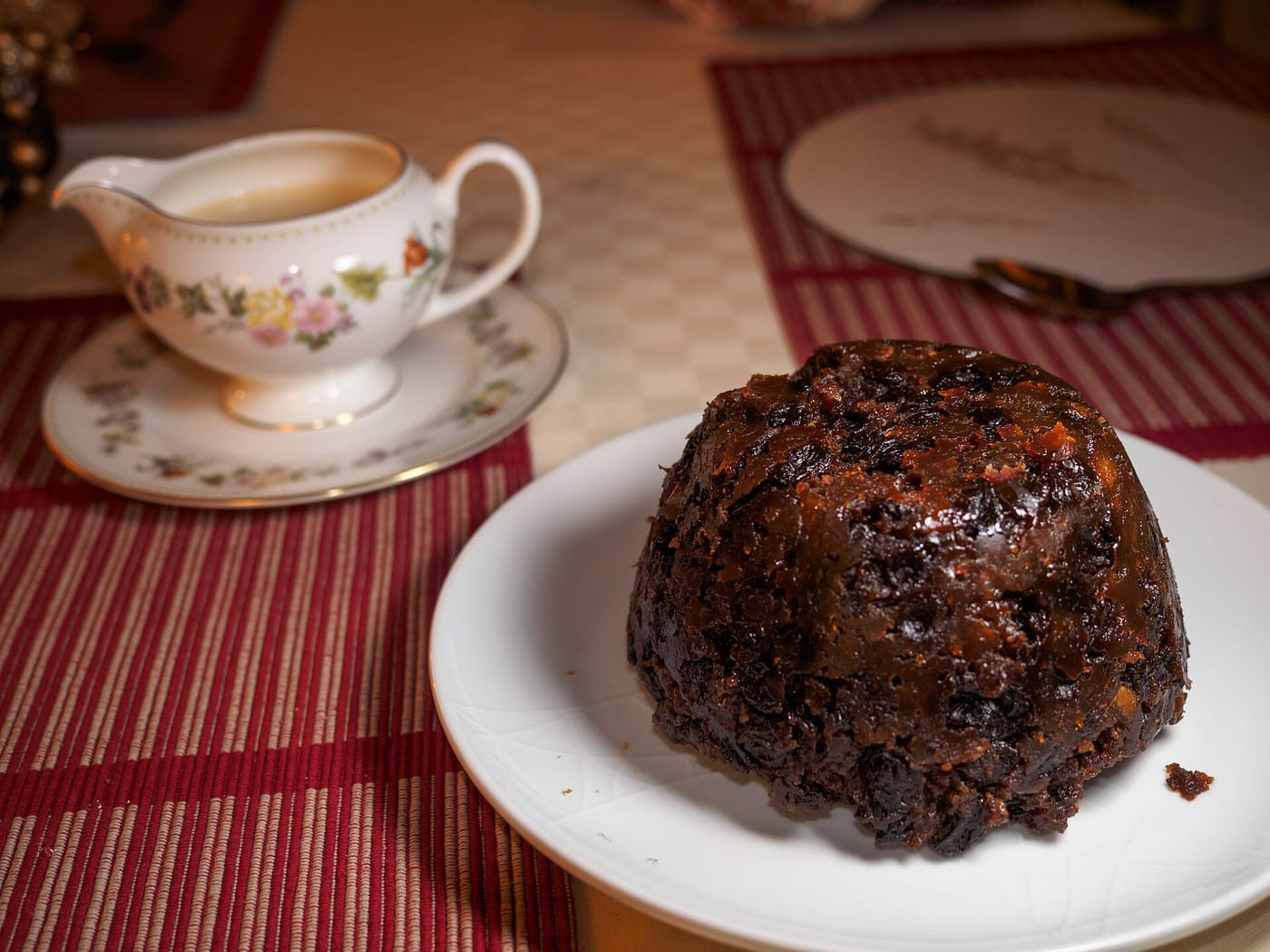
Traditional Christmas pudding
A dark, fruity Christmas pudding for a 1.2 litre basin: fruit soaked overnight in stout and brandy, steamed for 6 hours in a saucepan (no steamer needed), stored until Christmas and steamed again for 1 to 2 hours on the day. Serves 8, with what to do if you only have a microwave.
- Total
- 6 hr 30 min
- Prep
- 30 min
- Makes
- one 1.2 litre pudding, serves 8
- Difficulty
- easy, but long
Numbers checked in October 2026. An adaptation of a traditional recipe, written in our own words and checked against published British and Irish recipes. Keep the water at a gentle simmer and top it up: the clock matters less than a pan that never boils dry.
Ingredients
- Soak overnight
- 150 graisins
- 150 gsultanas
- 150 gcurrants
- 50 gmixed peel
- 125 gBramley apple, peeled and grated, about 1 small apple
- finely grated zest of 1 orange and 1 lemon
- 200 mlstout, such as Guinness, published recipes use 120 to 300 ml
- 3 tablespoonsbrandy or rum, or more stout
- Pudding
- 100 gfresh white breadcrumbs
- 50 gself-raising flour
- 100 gdark muscovado sugar
- 100 gcold butter, grated, or shredded suet, plus butter for the basin
- 2eggs, beaten
- 2 teaspoonsmixed spice
Method
- 1
The day before: mix the dried fruit, peel, grated apple, zest, stout and brandy in a large bowl. Cover and leave overnight so the fruit plumps up.
- 2
Butter a 1.2 litre pudding basin well and cut a circle of baking paper for the bottom.
- 3
Mix the breadcrumbs, flour, sugar, spice and grated butter or suet. Stir in the eggs and the soaked fruit with all its liquid until everything is evenly mixed. This is the moment for everyone in the house to have a stir and make a wish.
- 4
Spoon the mixture into the basin, press it down lightly and level the top, leaving a gap of 1 to 2 cm at the top for it to rise.
- 5
Cover with a double layer of baking paper and a layer of foil, both with a fold across the middle so the pudding can expand. Tie them on tightly under the rim with string, and make a string handle so you can lift the basin out.
- 6
Put an upturned saucer or a trivet in a large, deep saucepan, stand the basin on it and pour in boiling water to come halfway up the side of the basin. Cover the pan with a lid.
- 7
Steam over a low heat, with the water at a gentle simmer, for 6 hours. Check every hour or so and top up with boiling water from the kettle: the pan must never boil dry.
- 8
Lift the basin out and let it cool. Replace the paper and foil with fresh ones, and store in a cool, dark cupboard until Christmas.
- 9
On Christmas Day, steam the pudding again in the same way for 1 to 2 hours, until hot all the way through. Turn it out onto a warm plate.
What most often goes wrong
The problems British recipes warn about, and how to avoid them.
- The pan boiled dry
- Set a timer and top up with boiling water every hour or so. Keep the heat low: you want a gentle simmer, not a rolling boil.
- The top of the pudding is soggy
- Water got under the cover. Use a double layer of paper plus foil, with a fold so it can expand, and tie it tightly under the rim.
- It sticks in the basin
- Butter the basin well and put a circle of baking paper in the bottom. Run a knife round the edge before turning it out.
- It's pale and crumbly
- It hasn't steamed for long enough. The full 6 hours is what turns it dark, rich and sliceable.
- The mixture was left to mature before it was steamed
- Only the cooked pudding matures. The raw mixture contains egg and fruit that can start to ferment, so steam it the day you mix it (after the fruit's overnight soak); if a raw mixture has stood for days and smells sour or fizzy, start again.
How families make it differently
Every family has its own version. The most common differences:
Suet or butter
Older recipes use beef suet; many cooks now use grated butter or vegetarian suet. All three work in the same quantity.
Stout, brandy, rum or sherry
Some recipes soak the fruit in stout, others add brandy, rum, whiskey or sherry; the published versions range from a few tablespoons of spirit to 300 ml of stout.
A coin in the pudding
Some families still hide a silver coin in the pudding for luck. Wrap it in baking paper, push it in just before serving, and tell everyone it's there. Leave it out if young children are at the table: a coin is a choking risk.
Plan for Christmas
Saturday 21 November 2026
Soak the fruit in stout and brandy overnight.
Stir-up Sunday, 22 November
Mix, let everyone stir and make a wish, then steam for 6 hours. Cool, re-cover and store.
Christmas Day morning
Put the pudding on to steam for 1 to 2 hours while the turkey is in the oven. Make the brandy butter or custard.
After the main course
Turn out, flame with warm brandy if you like, and serve with brandy butter, custard or cream.
How to tell it's done
After the first 6 hours the pudding is very dark brown, firm and springy on top, and has shrunk slightly from the sides of the basin. On Christmas Day a skewer pushed into the centre should come out hot.
Food safety
Watch the water level during the long steaming: a pan that boils dry can scorch and crack. Never put foil in the microwave. If you flame the pudding with brandy, warm the brandy in a small pan or ladle off the heat, light it with a long match away from your face, hair and anything hanging above, and pour it over at the table.
What you can do ahead
That's the point of it: the pudding is made weeks ahead and matures in the cupboard. Traditionally it is made on Stir-up Sunday, the last Sunday before Advent, which in 2026 falls on 22 November. Some cooks make it months earlier. The fruit needs soaking the night before.
Storing and freezing
Keep the cooled pudding in its basin, with fresh paper and foil on top, in a cool, dark, dry cupboard. Some cooks 'feed' it with a spoonful of brandy every week or so. To reheat, steam for 1 to 2 hours; for the microwave, see the questions below.
Tips
- You don't need a steamer: a large saucepan with a lid and an upturned saucer in the bottom does the same job.
- Use a kitchen timer to remind you to top up the water every hour or so.
- Grated cold butter works instead of suet and gives a slightly lighter pudding. Vegetarian suet is also available.
- If the top is wet when you lift the paper after steaming, water got in: tie the paper and foil tighter next time.
Allergens
- Gluten (flour, breadcrumbs, stout)
- Egg
- Milk (butter)
- Sulphites (dried fruit, stout)
Always check the labels on the ingredients you buy.
Questions
When should I make my Christmas pudding?
Traditionally on Stir-up Sunday, the last Sunday before Advent (22 November in 2026), so it has about a month to mature. You can make it earlier, or even a few days before Christmas: it will just taste a little less rich.
How do I steam a Christmas pudding without a steamer?
Stand the basin on an upturned saucer or trivet in a large saucepan, pour boiling water halfway up the basin, put the lid on and keep it at a gentle simmer, topping up the water as it evaporates.
How long do you steam a Christmas pudding?
About 6 hours the first time for a 1.2 litre pudding, then 1 to 2 hours on Christmas Day to reheat it.
Can I reheat Christmas pudding in the microwave?
Yes. Take off the foil, cover the basin loosely with a plate or vented cling film, and heat at full power in short bursts of about a minute, letting it stand between bursts, until the middle is hot. Times depend on your microwave and the size of the pudding.
Do you have to feed a Christmas pudding?
No. Some cooks spoon a little brandy over it every week or so while it's stored, for a richer, moister pudding, but it keeps well without.
Where the numbers come from
Quantities, times and temperatures checked against at least two published recipes:
- Hairy Bikers: traditional Christmas pudding (1.2 L basin, 6 hours, 2 hours on the day)
- Donal Skehan: Theodora FitzGibbon's traditional Christmas pudding
- Gordon Ramsay Restaurants: Christmas pudding (1.25 L basin, 6 hours)
- Dualit: Christmas pudding (steaming and storing)
- Nigella: heating Christmas pudding in a microwave