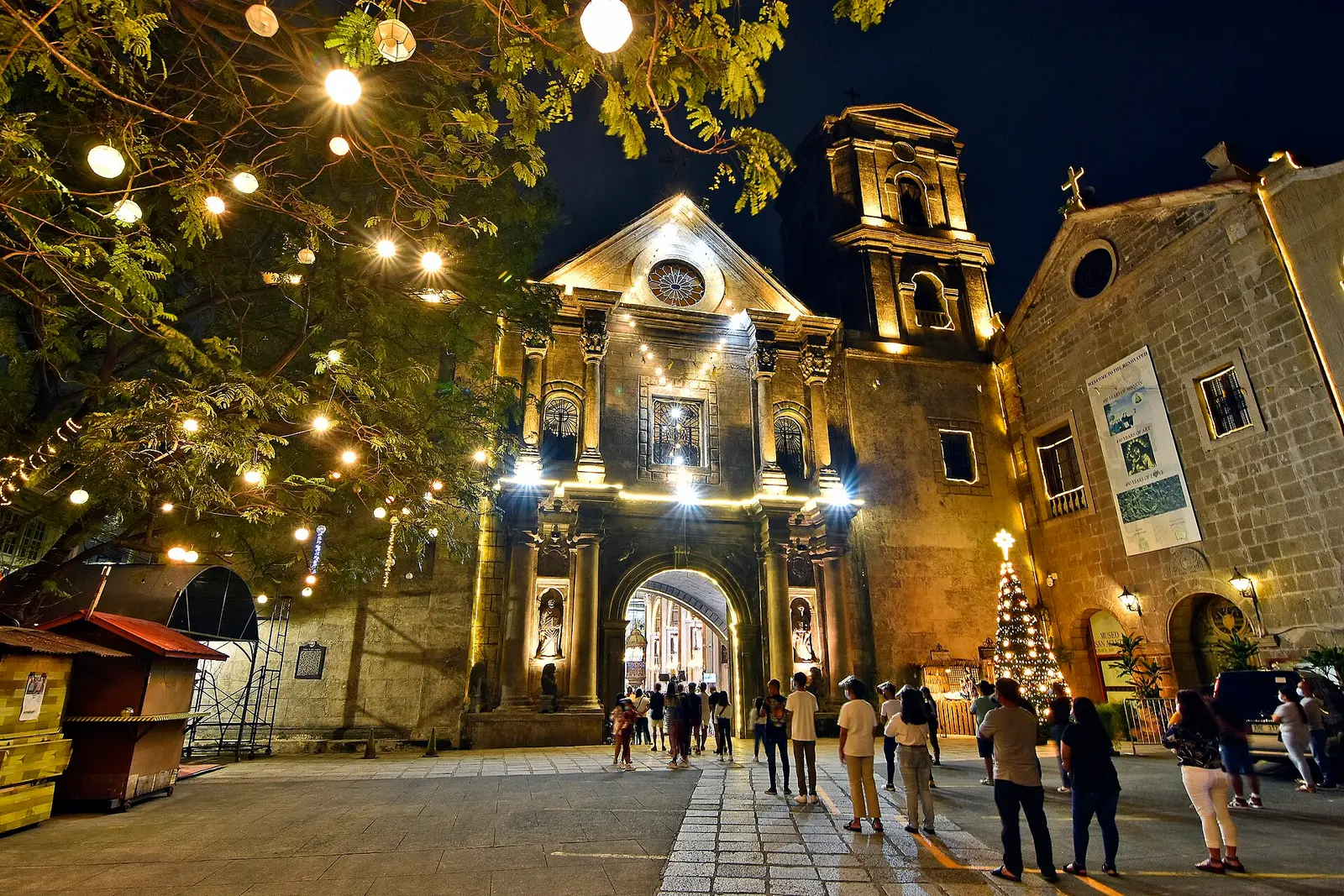
 Photo: Richmond Chi · CC BY-SA 4.0
Nine nights · December 15/16 – 24 · in the Australian summer
Simbang Gabi in Australia: nine Masses before Christmas, and the churches that hold them
For nine days before Christmas, Filipino Catholics in Australia gather for Simbang Gabi, the 'night Mass' novena. Some parishes keep the old dawn start, others hold it in the evening to suit work and the summer heat, and afterwards there is a Filipino breakfast or supper in the parish hall. Everyone is welcome. Here is what it means and which Australian churches have held it.
33 churches in 7 cities and regions · checked October 2026
📍 Find one near youuntil Simbang Gabi
What is Simbang Gabi?
Simbang Gabi is a novena, nine days of Masses leading up to Christmas, and the best-loved Christmas custom of the Philippines. The name means 'night Mass'. It is also called Misa de Gallo, the rooster's Mass, because the Masses were once said before sunrise; the final one on Christmas Eve is sometimes called Misa de Aguinaldo, the gift Mass.
The custom goes back to the Spanish colonial period, when priests held Mass before dawn so that farmers and fishermen could attend before the day's work. Filipinos in Australia brought it with them, and Filipinos are now one of the larger migrant communities in the country; around three quarters of Australians who identify as Filipino are Catholic. Many believe that completing all nine Masses brings a wish granted, though most people simply come for the company.
How it is kept in Australia: dawn, evening and summer
December falls in the Australian summer, and what you find depends on the parish. In Melbourne, the archdiocese's own 2025 listing shows a mix: a dozen parishes held the nine Masses at about 5 am, while others, including Dandenong, North Fitzroy, Melton West, Bundoora and Berwick, held them at 7 to 8 pm. Sydney's Chatswood and Blacktown parishes have long kept a very early start, with Chatswood at 5:30 am in the listings we found. Canberra and Perth parishes have mostly held the novena in the evening.
Dates differ as well. Dawn novenas normally run 16 to 24 December, while evening 'anticipated' Masses start the night before and run 15 to 23 December, so that the ninth Mass is the evening of the 23rd. Some parishes shorten or shift the nine nights around the priest's other Christmas duties; one Gold Coast parish held its 2025 novena from 15 to 23 December for that reason. Because times change from year to year, treat every time on this page as last year's and check the parish bulletin.
Food after Mass: bibingka, puto bumbong and salabat
Eating together is half the point. In the Philippines the stalls outside the church sell bibingka, a rice cake baked in banana leaves with salted egg and cheese, and puto bumbong, purple sticky rice steamed in bamboo and served with butter, coconut and sugar, with salabat, hot ginger tea. In Australian parishes the food is usually a shared breakfast or supper in the hall, often sponsored by a different family each night; a Sydney choir leader and a Gold Coast organiser both describe a Filipino breakfast after the dawn Masses.
Newcomers are welcome to join. Non-Filipinos attend in good numbers in several parishes, and some, like the multicultural evening Mass at North Fitzroy, are meant to be shared with other communities.
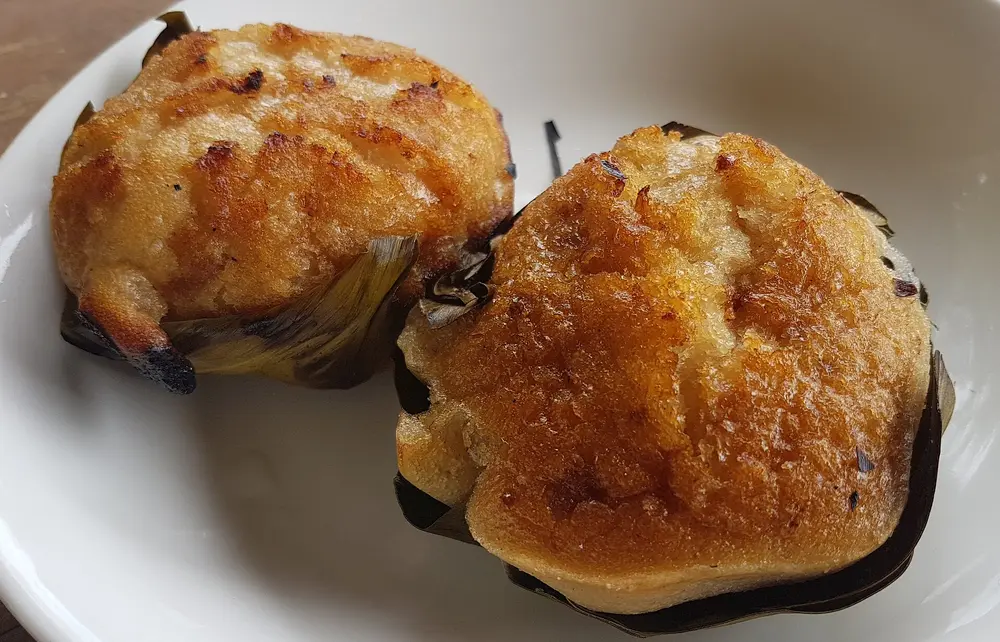 Photo: Obsidian Soul · CC0
The parol and Noche Buena
The symbol of the season is the parol, a star lantern for the star of Bethlehem, traditionally made from bamboo and paper or capiz shell and lit in windows and churches from early December. Many parish halls and church porches are hung with parols for the novena.
The nine Masses lead to Noche Buena, the family feast after the Christmas Eve Mass, usually a late supper that goes past midnight. Filipino families in Melbourne and elsewhere describe ham, pasta and rice dishes on the table, then presents on Christmas Day, which in Australia is often a warm day at the beach or in the garden.
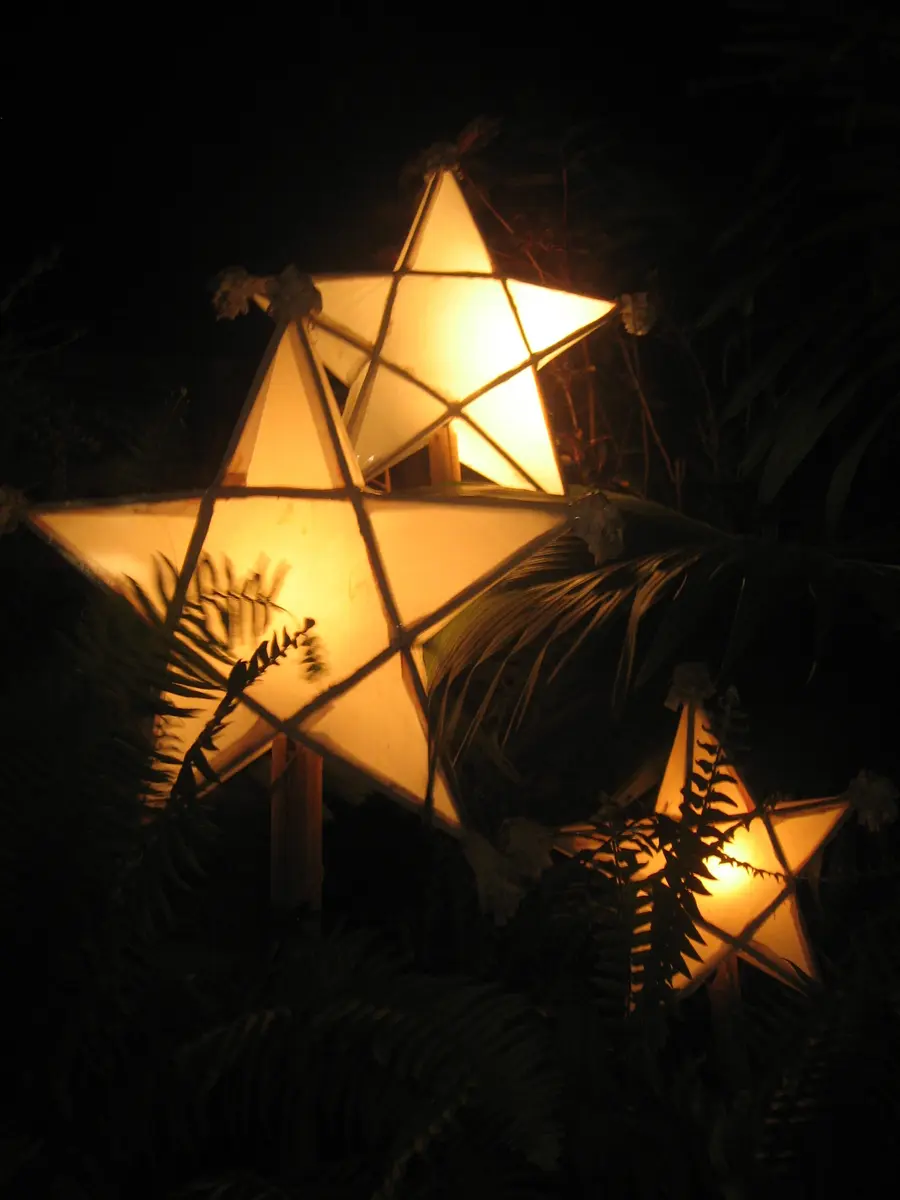 Photo: Eugene Alvin Villar · CC BY-SA 4.0
Tips for visitors
Check the parish bulletin or the archdiocese's events page in late November; 2026 times are normally posted then. Arrive 10 minutes early for the dawn Masses, which fill quickly, and expect the Mass to be in English with Filipino hymns and sometimes a few Tagalog responses. Dress is the same as for any Sunday Mass, but in summer you will be glad of something light. You do not need to be Filipino or to attend all nine nights; people come to one, to a few, or to the last. Bring a small plate if the parish hall asks for contributions, and stay for the food.
Churches that have held Simbang Gabi in Australia
Melbourne's list is the Archdiocese of Melbourne's own 2025 schedule. Other cities rest on the latest listings we could verify (Filipino Times Australia, diocesan and press reports), and each church shows the year it was confirmed. Australian dioceses do not publish one national list, and we could not confirm any 2025 or later schedule for Adelaide, Darwin, Hobart or most of Brisbane, so check your parish. 2026 times are posted around late November.
By city
Sydney, NSW
Chatswood
Our Lady of Dolours Parish, Chatswood
The Filipino Chaplaincy of Chatswood Parish runs a dawn novena with an all-Filipino choir, and many non-Filipinos come; volunteers sponsor a breakfast afterwards. The best-documented Simbang Gabi in Sydney.
Last held: Dawn novena still running in December 2025 (press report, 23 Dec 2025); latest listing found: 16–24 December 2023, 5:30 am
Blacktown
St Patrick's Church (Mary Queen of the Family Parish), Blacktown
Western Sydney's very early start, with the nine dawn Masses before the working day.
Last held: 16–24 December 2023, 4:30 am
Quakers Hill
Mary Immaculate Catholic Church, Quakers Hill
Offers both versions: a dawn novena and an evening novena a day earlier, so you can pick the time that suits.
Last held: 2023: dawn 16–24 December 4:30 am and evening 15–23 December 7 pm
Dee Why
St Kevin's Church, Dee Why
An evening novena on the northern beaches, run by the Filipino chaplaincy of the Diocese of Broken Bay.
Last held: 15–23 December 2023, 7:30 pm
Kogarah
St Patrick's Catholic Church, Kogarah
A dawn novena in southern Sydney.
Last held: 16–24 December 2023, 5:15 am
Lidcombe
St Joachim's Catholic Church, Lidcombe
A dawn novena in Sydney's inner west.
Last held: 16–24 December 2023, 5:15 am
Melbourne, VIC
North Fitzroy
St Brigid's Church, North Fitzroy
Base of the Filipino chaplaincy. The evening novena here is multicultural, so other communities sing carols in their own languages and share food.
Last held: 15–23 December 2025, 7:30 pm
Dandenong
St Mary's Parish, Dandenong
An evening novena in the south-east.
Last held: 16–24 December 2025, 8 pm
Bundoora
St Damian's Church, Bundoora
An evening novena in the north.
Last held: 16–24 December 2025, 7 pm
Melton West
St Catherine of Siena Church, Melton West
An evening novena in the growing west.
Last held: 16–24 December 2025, 8 pm
Berwick
St Michael's Church, Berwick
Evening novena; this one sits in the Diocese of Sale but serves south-east Melbourne.
Last held: 16–24 December 2025, 7:30 pm
St Albans
Holy Eucharist Church, St Albans
A dawn novena in the western suburbs, where much of Melbourne's Filipino community lives.
Last held: 16–24 December 2025, 5 am
Deer Park
St Peter Chanel Church, Deer Park
A dawn novena in the west.
Last held: 16–24 December 2025, 5 am
Maidstone
Holy Family Parish, Maidstone
A dawn novena in the inner west.
Last held: 16–24 December 2025, 5 am
Kings Park
Resurrection Church, Kings Park
A dawn novena in the north-west.
Last held: 16–24 December 2025, 5 am
Hoppers Crossing
St Peter the Apostle Church, Hoppers Crossing
A dawn novena in Wyndham.
Last held: 16–24 December 2025, 5 am
Lalor
St Luke's Church, Lalor
A dawn novena in the north.
Last held: 16–24 December 2025, 5 am
Frankston
St Francis Xavier Church, Frankston
A dawn novena on the Mornington Peninsula side of the bay.
Last held: 16–24 December 2025, 5 am
Seaford
St Anne's Church, Seaford
A dawn novena in the south-east.
Last held: 16–24 December 2025, 5 am
Melton South
St Anthony of Padua, Melton South
A dawn novena in Melton.
Last held: 16–24 December 2025, 5 am
Cranbourne
St Agatha's Church, Cranbourne
A dawn novena in the south-east (Diocese of Sale).
Last held: 16–24 December 2025, 5 am
South Clayton
St Andrew's Church, South Clayton
A single dawn Mass rather than the full novena.
Last held: 21 December 2025 only, 5 am
Brisbane, QLD
Acacia Ridge
Our Lady of Fatima Church, Acacia Ridge
A very early dawn novena in Brisbane's south.
Last held: 16–24 December 2023, 4:30 am
Springfield Lakes
Our Lady of Southern Cross Parish, Springfield Lakes
A dawn novena in Ipswich/Springfield, running a day earlier than most.
Last held: 15–23 December 2023, 5 am
Gold Coast, QLD
Coomera
St Mary's Parish, Coomera
A family-organised dawn novena with a Filipino breakfast sponsored by parishioners; the dates were moved a day earlier to fit the priest's Christmas Eve duties.
Last held: 15–23 December 2025, 5:30 am
Perth, WA
Cloverdale
Notre Dame Parish, Cloverdale
Perth's longest-running parish Simbang Gabi, with the San Lorenzo Ruiz choir. The Archbishop of Perth has celebrated one of the Masses.
Last held: 2024 (seventh year); 2023: 15–23 December, 8 pm
Kiara
Good Shepherd Catholic Church, Kiara (Lockridge)
An evening novena in the north-east, with earlier Masses on weekends.
Last held: 16–24 December 2023: 7 pm weekdays, 6 pm Saturday, 5 pm Sunday
Perth CBD
St Mary's Cathedral, Perth
The cathedral has announced a Simbang Gabi celebration in English, open to all, and mentions that city parishes often hold it around 8 or 9 pm.
Last held: Announcement dated 2022; no later date confirmed
Canberra, ACT
Yarralumla
St Peter Chanel Church, Yarralumla
An evening novena, organised with the Philippine Embassy; the Archbishop of Canberra and Goulburn has celebrated the first night.
Last held: 15–23 December 2023, 7 pm
Regional Victoria, VIC
Corio
St Francis Xavier Church, Corio (Geelong)
A dawn novena in Geelong, starting half an hour later than most.
Last held: 16–24 December 2025, 5:30 am
Bendigo
St Kilian's Parish, Bendigo
A dawn novena in central Victoria.
Last held: 16–24 December 2023, 5:30 am
Wodonga
St Augustine's Church, Wodonga
An evening novena on the Victoria-NSW border.
Last held: 15–23 December 2023, 7 pm
Sebastopol
St James' Parish, Sebastopol (Ballarat)
Evening Masses around Ballarat; the last one is held in the afternoon of 24 December.
Last held: 16–24 December 2023, mostly 7 pm (24 December 2 pm)
Questions
- When is Simbang Gabi 2026 in Australia?
- The dawn novena traditionally runs 16 to 24 December 2026, and evening 'anticipated' Masses 15 to 23 December. Individual parishes set their own nights and times and usually publish them in late November, so check the bulletin of the church you plan to visit.
- Where can I attend Simbang Gabi in Sydney?
- Parishes that have held it include Our Lady of Dolours in Chatswood (dawn, with a Filipino chaplaincy), St Patrick's Blacktown, Mary Immaculate in Quakers Hill, St Kevin's in Dee Why (evening), Kogarah and Lidcombe. Times in our list are from the latest listings we could verify, so confirm before you go.
- Where can I attend Simbang Gabi in Melbourne?
- The Archdiocese of Melbourne listed 17 churches for 2025 (including Geelong's Corio and two in the Diocese of Sale). Most held dawn Masses at 5 am, including St Albans, Deer Park, Maidstone, Kings Park, Hoppers Crossing, Lalor, Frankston and Seaford. Evening options were Dandenong, North Fitzroy, Melton West, Bundoora and Berwick.
- Do you have to be Filipino to go?
- No. Simbang Gabi is an ordinary Catholic Mass, open to everyone. Parishes in Melbourne and Sydney specifically invite non-Filipinos, and some evening Masses are multicultural. You are also welcome to stay for the food afterwards.
- Is Simbang Gabi at dawn or in the evening in Australia?
- Both. Many Australian parishes keep the early dawn Mass, usually 4:30 to 5:30 am. Others hold it in the evening, around 7 to 8 pm, which suits work schedules and avoids long travel in the dark; Canberra, Perth and several Melbourne parishes do this.
- What is a parol?
- A parol is the Filipino star lantern of Christmas, a symbol of the star of Bethlehem. It is traditionally made of bamboo and paper or capiz shell and lit in windows, churches and parish halls during the novena.
- What food is served after Simbang Gabi?
- In the Philippines it is bibingka (rice cake baked in banana leaves) and puto bumbong (purple sticky rice steamed in bamboo), with salabat, hot ginger tea. In Australian parishes it is usually a shared Filipino breakfast or supper in the hall, with different dishes each night.